




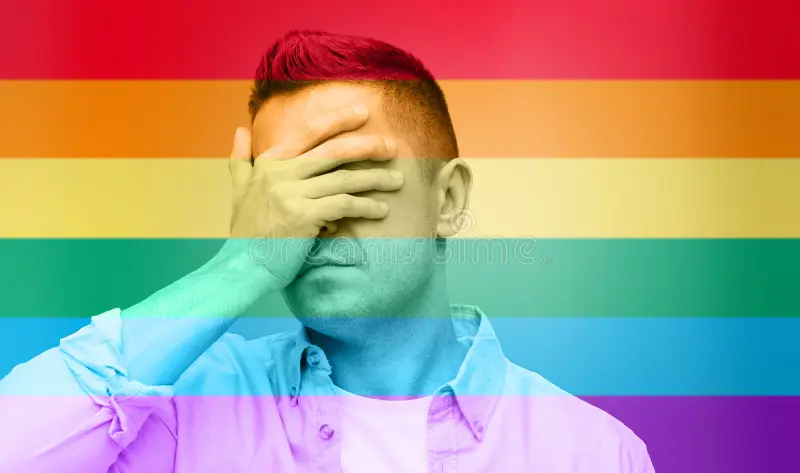
Many LGBTQ+ people become experts at reading the room. Before entering a new environment, they may find themselves unconsciously scanning for signs of safety or danger. Who is here? How accepting does this place feel? Am I going to fit in? Will I be judged? Do I need to tone myself down at all? These questions often happen automatically and outside conscious awareness. What many people don’t realise is that this isn’t simply overthinking. For many LGBTQ+ people, it can be a form of hypervigilance: a nervous system that has learned to stay alert because, at one time, being alert genuinely helped keep them safe.
WHAT IS HYPERVIGILANCE?
Hypervigilance is a state of heightened awareness of potential threat. It involves constantly scanning people, environments, and situations for signs of danger, rejection, criticism, conflict, or exclusion. The nervous system becomes organised around anticipating what might go wrong before it happens. Someone experiencing hypervigilance may find themselves closely monitoring facial expressions, noticing subtle changes in tone of voice, worrying about how they are perceived, or struggling to fully relax around unfamiliar people. While hypervigilance is often associated with trauma, it can also develop through repeated experiences of shame, bullying, discrimination, rejection, emotional invalidation, or concealment.
For many LGBTQ+ people, these experiences begin long before they fully understand their sexuality or gender identity. Over time, the nervous system learns that staying alert may help avoid embarrassment, rejection, or emotional pain. The difficulty is that these protective strategies can continue long after the original threat has passed. What once helped somebody survive can later become exhausting, leaving them feeling as though they are constantly watching, assessing, and preparing for problems that may never arrive.
HOW MINORITY STRESS SHAPES THE NERVOUS SYSTEM
To understand why hypervigilance is so common within LGBTQ+ communities, it helps to understand minority stress. Minority stress refers to the additional pressures experienced by people from marginalised groups as a result of stigma, discrimination, prejudice, exclusion, and social inequality. Research consistently shows that LGBTQ+ people experience higher rates of anxiety, depression, substance misuse, and emotional distress. This isn’t because there is something inherently unhealthy about being LGBTQ+. Rather, it reflects the cumulative impact of living in environments where acceptance can feel uncertain and where rejection, judgement, or discrimination remain real possibilities.
Minority stress doesn’t only arise from major incidents of discrimination. It can develop through countless smaller experiences that accumulate over time. The jokes that make you uncomfortable. The assumptions that everybody is heterosexual. The silence when LGBTQ+ topics are discussed. The fear of how someone might react if they knew more about you. Even when no obvious threat is present, the nervous system can learn to stay prepared for one.
For many LGBTQ+ people, hypervigilance isn’t a sign that something is wrong with them.
It’s often evidence that their nervous system adapted to environments that didn’t always feel safe.
WHEN CHILDHOOD BECOMES SELF MONITORING
As a gay man growing up in the 1970s and 1980s, I often felt different long before I fully understood why. Many LGBTQ+ people describe a similar experience. Before we have language for sexuality or gender identity, we often become aware that certain behaviours, interests, expressions, or qualities are treated differently. Children are remarkably observant. They notice what gets mocked, who gets laughed at, and which people seem accepted or excluded.
Over time, many LGBTQ+ people begin monitoring themselves in response. They become aware of how they speak, how they walk, how they express emotion, and how others react to them.
For many of us, childhood gradually becomes less about self expression and more about self monitoring.
We learn to read the room because belonging feels uncertain. We learn to adapt because authenticity can sometimes feel risky. Looking back now, I can see how much energy went into trying to anticipate other people’s reactions rather than simply being myself.
This kind of awareness isn’t a character flaw. It’s an adaptation. When children learn that authenticity may come with social consequences, paying attention becomes protective. The problem is that what helps us survive childhood can continue operating long into adulthood, even when our circumstances have changed.
HOW HYPERVIGILANCE SHOWS UP IN ADULT LIFE
Hypervigilance doesn’t always look dramatic. Often it appears in subtle ways that people don’t immediately recognise. It can show up as people pleasing, perfectionism, social anxiety, difficulty trusting others, fear of conflict, emotional exhaustion, or constantly worrying about how you’re perceived. Many people become exceptionally skilled at anticipating other people’s needs while losing touch with their own.
Even now, before entering a new environment, I sometimes notice myself performing an almost automatic risk assessment.
I find myself taking in the atmosphere, noticing who is present, and getting a sense of whether the space feels safe. Not because I believe everyone is dangerous and not because therapy hasn’t helped, but because my nervous system spent many years learning that paying attention to other people’s reactions was important.
The difference today is that I notice it happening. I understand where it comes from and it no longer controls my life in the way it once did. Many LGBTQ+ people describe something similar. They may find themselves constantly scanning for signs of rejection, even in environments that are largely accepting. They may struggle to fully relax because part of them still expects criticism, exclusion, or judgement. The nervous system can take time to learn that the present is not the same as the past.
HOW THERAPY CAN HELP
Many LGBTQ+ people arrive in therapy believing there is something wrong with them because they feel anxious, cautious, emotionally exhausted, or constantly on alert. Often, what they discover instead is that these patterns make sense in the context of their experiences. Many of these responses can also be understood through a trauma informed lens, recognising how repeated experiences of shame, bullying, rejection or discrimination can shape the nervous system over time. Hypervigilance is rarely a sign of weakness. More often, it’s evidence of a nervous system that learned to adapt to environments where acceptance, belonging, or safety felt uncertain.
Therapy can help people understand where these patterns came from and explore how they continue to affect relationships, self esteem, boundaries, and everyday life. It can provide a space where you don’t have to monitor yourself quite so closely, where you don’t need to explain or justify your identity, and where you can begin developing a greater sense of safety within yourself. For many LGBTQ+ people, simply experiencing a relationship where they feel accepted, understood, and valued can be an important part of the healing process.
Over time, therapy may help you move away from constantly anticipating rejection and towards greater self compassion, authenticity, connection, and emotional freedom. It can help you recognise that the problem was never that you were too sensitive, too emotional, or too aware. Often, the problem was growing up in environments where authenticity didn’t always feel safe.
Hypervigilance is not a character flaw.
It’s often a nervous system doing its best to protect you. And while those protective strategies may once have been necessary, they don’t have to define the rest of your life.
If any of this resonates with you and you’d like support exploring it further, I offer LGBTQ+ affirming therapy both online and in person from my practice in Manchester city centre. You’re welcome to get in touch to arrange a free 15 minute introductory call.