


Relationships with parents can be some of the most important and emotionally complicated relationships we ever experience. For many LGBTQ+ people, family relationships carry layers of love, loyalty, grief, shame, disappointment, hope and longing that can remain with us long into adulthood.
When people think about LGBTQ+ family relationships, they often imagine dramatic stories of rejection or being thrown out of the family home. While those experiences certainly happen and continue to happen, many LGBTQ+ people experience something much more complicated. They may have parents who loved them in many ways, provided for them and did the best they could with the knowledge they had. At the same time, those same parents may have struggled to accept their child’s identity, carried prejudices they never examined, or failed to provide the emotional safety their child needed. These experiences can leave lasting wounds that are often difficult to explain to people who haven’t lived them. The pain isn’t always about what happened. Sometimes it’s about what didn’t happen. The conversations that never took place, the support that never arrived and the acceptance that felt conditional rather than unconditional.
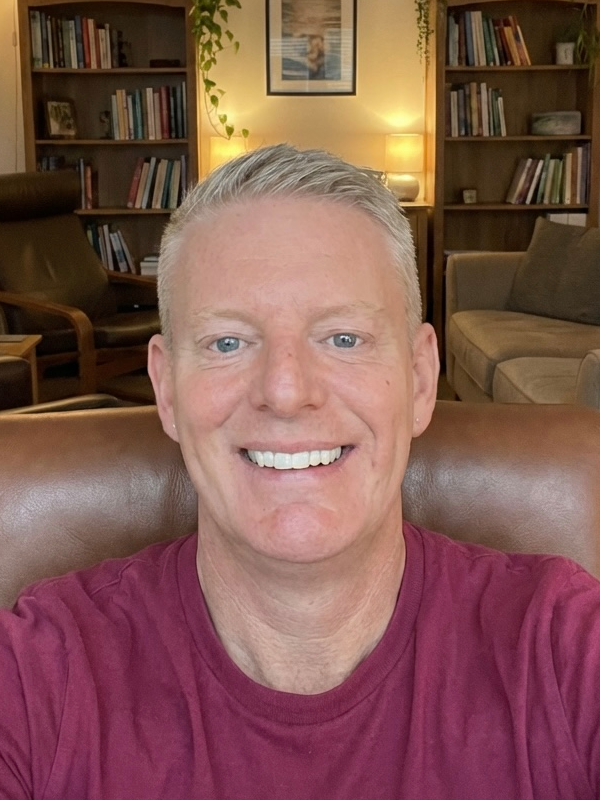
As both a gay man and an LGBTQ+ therapist, I often find myself reflecting on the impact that family relationships have had on my own life. Looking back, I can see that many of the challenges I carried into adulthood were not simply about being gay. They were about learning very early on that parts of myself felt unsafe to share with the people whose acceptance mattered most.
WHY LGBTQ+ RELATIONSHIPS WITH PARENTS CAN BE SO COMPLICATED
Attachment theory suggests that children are biologically wired to seek safety, protection and connection from their caregivers. Our earliest relationships help shape our understanding of ourselves, other people and the world around us. Children learn powerful lessons from their families. Am I lovable? Am I safe? Do my feelings matter? Can I be myself and still belong?
For LGBTQ+ children, these questions often become tangled up with identity. Many of us become aware that we are somehow different long before we have the language to explain why. We notice what is celebrated, what is criticised, what is laughed at and what is spoken about with discomfort. We become skilled observers of our environment because our sense of safety depends on it. When children sense that authenticity might threaten connection, they often adapt. They become quieter, more careful and more watchful. They learn to edit themselves in order to maintain belonging. These adaptations make perfect sense in the environments where they develop. The problem is that they often continue long after childhood has ended.
CONDITIONAL ACCEPTANCE AND THE COST OF BELONGING
One of the most painful experiences many LGBTQ+ people encounter is conditional acceptance. Conditional acceptance rarely sounds like outright rejection. Instead, it often sounds like:
“I love you, but I don’t agree with it, I don’t mind as long as you don’t talk about it, We’ll accept you, but not your lifestyle, Just don’t shove it down our throats.”
On the surface these statements may appear accepting. Compared to outright hostility, they can even feel generous. Yet underneath them is an important message: some parts of you are welcome, but other parts are not. For many LGBTQ+ people, this creates an impossible dilemma. We all need attachment and belonging. We all need connection. But if connection depends on hiding parts of ourselves, we are forced into a painful choice between authenticity and acceptance.
Many people spend years trying to find a compromise between the two. They avoid difficult conversations, downplay relationships, minimise their experiences and make themselves smaller so that others feel more comfortable.
Children will often sacrifice authenticity to preserve attachment.
The tragedy is that over time this can create distance not only from family members but from ourselves. The strategies that once helped us maintain connection can gradually leave us feeling unseen, unheard and disconnected from our own needs and identity.
ATTACHMENT, SHAME AND LEARNING TO HIDE
One of the things I often reflect on is how shame develops in small moments. Growing up, my mother would frequently point out gay people on television. She would refer to them as “homosexuals” in a particular tone of voice that communicated disapproval and discomfort. Whenever it happened, I felt myself shrinking. I wanted the sofa to swallow me up. Even as an adult visiting at Christmas, hearing those comments still created the same feeling in my body.
The interesting thing is that I didn’t have the language to understand what was happening at the time. I couldn’t have told you I was experiencing shame. I simply knew that I felt embarrassed, exposed and uncomfortable. Looking back now, I understand it differently. The message I absorbed wasn’t simply that those people on television were somehow different. The message was that if people truly knew who I was, they might see me in the same way.
Many LGBTQ+ people carry similar experiences. They may never have been explicitly rejected. Nobody may have directly told them they were unacceptable. Yet countless comments, jokes, assumptions, silences and reactions communicate powerful messages about what is and isn’t safe to reveal.
The message wasn’t simply that those people were different. The message was that if people truly knew who I was, they might see me in the same way.
Over time these experiences can shape how we relate to ourselves and other people. Many LGBTQ+ adults become experts at monitoring the emotional climate around them. They learn to anticipate reactions, avoid conflict and manage other people’s discomfort. What originally develops as self protection can eventually become hypervigilance, people pleasing, hyper independence, perfectionism, shape shifting, emotional withdrawal or difficulty trusting others.
WHEN PARENTS ACCEPT YOU BUT STILL HOLD HARMFUL BELIEFS
Family relationships are rarely straightforward. One of the most confusing experiences for many LGBTQ+ people is when parents appear accepting on the surface while continuing to hold beliefs that feel hurtful underneath. Sometimes parents welcome a same sex partner into the family home but continue to treat the relationship differently from a heterosexual one. Sometimes they insist they are supportive while making jokes, expressing stereotypes or avoiding conversations about sexuality or gender identity altogether. Some may happily attend family gatherings while still viewing LGBTQ+ relationships as less stable, less serious or somehow less valid than heterosexual relationships.
I’ve worked with LGBTQ+ clients whose parents accepted their partners but didn’t trust them around children. Others have described family members who welcomed them home but refused to use a partner’s title, acknowledge a marriage or discuss important aspects of their lives. These experiences can be difficult to challenge because they exist in a grey area between acceptance and rejection. The result is often confusion. LGBTQ+ people may find themselves wondering whether they are being unreasonable for feeling hurt. After all, their parents haven’t rejected them. Yet emotional pain doesn’t disappear simply because somebody claims to be accepting.
Acceptance is more than tolerance. Genuine acceptance involves curiosity, respect, openness and a willingness to challenge our own assumptions.
Love without acceptance can still leave deep emotional wounds.
Without those things, relationships can remain emotionally limited, even when contact continues.
GRIEVING THE PARENTS WE NEEDED
I think one of the least discussed experiences within the LGBTQ+ community is grief. Not necessarily grief for parents who have died, although that may be part of the story. Rather, grief for the parents we needed but never fully had. Many LGBTQ+ people spend years carrying a longing for something that was missing. Sometimes it’s protection. Sometimes it’s understanding. Sometimes it’s emotional warmth. Sometimes it’s simply the feeling of being seen and celebrated for who they are.
Growing up, I often felt different from other children. Looking back, part of what I grieve isn’t simply the bullying or the shame. It’s the absence of the support that might have helped me navigate those experiences. I see families now who spend time together, show affection openly and create emotional safety for their children. There is something beautiful about witnessing that, but there can also be sadness in recognising what was absent from your own experience.
Many LGBTQ+ adults aren’t grieving a parent they lost. They’re grieving the parent they never had.
Many LGBTQ+ adults never talk about these losses because they feel disloyal. They tell themselves their parents did their best. They remind themselves that other people had it worse. They focus on gratitude and minimise their pain. Yet acknowledging grief isn’t the same as blaming our parents. We can recognise the limitations of our parents’ generation, upbringing or circumstances while also acknowledging the impact those limitations had on us. Both things can be true at the same time. A parent may have loved their child deeply and still failed to provide what that child needed. That reality is often where grief lives.
ESTRANGEMENT, BOUNDARIES AND PROTECTING YOUR MENTAL HEALTH
Family estrangement remains one of the most misunderstood topics in discussions about LGBTQ+ mental health. People often assume that individuals who become estranged from parents are acting impulsively, holding grudges or refusing to forgive. In reality, estrangement is usually the result of years, sometimes decades, of unresolved pain.
Most people don’t cut contact with parents lightly. Human beings are wired for attachment. We naturally seek connection with family. Most LGBTQ+ people spend years hoping relationships can improve before considering distance as an option. Sometimes relationships become healthier through boundaries. Parents reflect, learn and change. Difficult conversations take place. Understanding grows. Reconciliation becomes possible.
Most people don’t cut contact with parents lightly.
Sometimes that doesn’t happen. When parents remain persistently homophobic, transphobic, abusive, dismissive or unwilling to engage in self reflection, maintaining contact can come at a significant psychological cost. In those situations, reducing contact or ending it altogether may become an act of self protection rather than punishment. Boundaries are not about controlling other people. They are about deciding what we need in order to remain emotionally safe. For some LGBTQ+ people, healing involves rebuilding family relationships. For others, healing involves accepting that those relationships are unlikely to change. Both paths can be valid.
RELATIONSHIPS REQUIRE EFFORT FROM BOTH SIDES
One of the challenges I sometimes see is LGBTQ+ people taking sole responsibility for repairing family relationships. They attend therapy. They read books. They explore their childhood experiences. They work on communication. They practise compassion. They reflect on their own behaviour.
All of this can be valuable. Yet relationships are co created. One person cannot repair a relationship alone. Parents also have a role to play. If parents want meaningful relationships with their LGBTQ+ children, they may need to examine long held beliefs and biases. They may need to tolerate discomfort, acknowledge mistakes and become curious about experiences they don’t fully understand.
Relationships are co created. One person cannot repair a relationship alone.
Parents may also need to recognise that intent and impact are not the same thing. A comment that seemed harmless to them may have carried significant emotional weight for their child. Growth is possible at any age. I’ve seen parents become more accepting, more understanding and more emotionally available. But meaningful change requires willingness. Without that willingness, relationships often remain stuck in familiar patterns.
ACCEPTING THE RELATIONSHIP WE ACTUALLY HAVE
Perhaps one of the hardest parts of healing is accepting relationships as they are rather than as we wish they could be. Acceptance doesn’t mean approving of everything that happened. It doesn’t mean giving up hope or pretending hurt doesn’t exist. Instead, it means seeing reality clearly.
As I’ve reflected on my own family relationships over the years, I’ve sometimes wondered whether things might have been different if I had possessed the self awareness, language and understanding I have today. Perhaps certain conversations could have happened. Perhaps certain feelings could have been expressed. Perhaps there might have been opportunities for greater understanding.
Sometimes acceptance means acknowledging that our parents were unable to become the people we needed them to be.
At the same time, I recognise that relationships don’t exist in a vacuum. They require participation from everyone involved. No amount of insight can create change on behalf of another person. Sometimes acceptance means acknowledging that our parents were unable to become the people we needed them to be. That isn’t a judgement. It’s simply a recognition of reality. Paradoxically, it is often through accepting reality that healing becomes possible.
HOW THERAPY CAN HELP
Family relationships can leave deep emotional imprints that continue to influence our sense of self, relationships and mental health long into adulthood. Therapy can provide a space to explore these experiences without judgement, helping people understand how attachment wounds, shame, grief, people pleasing, hypervigilance or difficulties with boundaries may have developed.
For some people, therapy becomes a space to process estrangement. For others, it provides support while navigating ongoing family relationships. Many people find themselves exploring grief, anger, sadness, compassion and acceptance, often all at the same time.
There is no right way to feel about family relationships.
What matters is creating enough understanding and self compassion to make choices that support your wellbeing and allow you to live more authentically. Whatever challenges you’re facing, there’s usually a reason they developed in the first place. The thoughts, feelings and behaviours we struggle with today are often adaptations to experiences that once required us to survive, protect ourselves or belong. Understanding those patterns with curiosity and compassion can be the first step towards lasting change.