

LGBTQ+ recovery is about far more than simply stopping drinking or using substances. For many LGBTQ+ people, alcohol and substances were never really about partying at all. They were often about survival, about finding confidence, connection, belonging, escape, or temporary relief from shame, anxiety, loneliness, or emotional pain. For some people, drinking became a way of easing the fear of walking into a gay bar alone, helping them feel less self conscious, less anxious, and more able to exist freely in spaces that were supposed to feel safe.. For others, substances became linked to sex, intimacy, touch, validation, or the freedom to finally stop monitoring themselves for a few hours.
Within LGBTQ+ culture, alcohol and substances can become deeply woven into social life. Historically, bars and clubs were among the only places where LGBTQ+ people could meet openly and safely. These spaces offered refuge, visibility, friendship, and community at a time when many people had nowhere else to go. For many people, they genuinely were lifesaving spaces.
But there can also be another side to this culture. When connection becomes heavily centred around drinking, clubbing, chemsex, or substance use, the line between socialising and coping can slowly become blurred. What once felt freeing can gradually begin causing harm.
GROWING UP LGBTQ+ IN A HOSTILE WORLD
As a gay man growing up in the 1980s, I didn’t grow up surrounded by affirming messages about who I was. I grew up during Section 28, the AIDS crisis, and years of bullying. I was called “Gay Gavin” throughout childhood, something that left a lasting impact on how I saw myself and my place in the world.
Like many LGBTQ+ people, I became hypervigilant. I monitored myself constantly, my behaviour, my voice, my body language, the way I walked, the space I took up, and how others might perceive me.
Looking back now, I can see how exhausting it was to live in a state of constant self monitoring and anxiety.
Research consistently shows that LGBTQ+ people experience higher rates of anxiety, depression, addiction, and suicidality than heterosexual populations. Minority Stress Theory helps explain why. Chronic exposure to rejection, stigma, discrimination, concealment, and shame impacts the nervous system over time, shaping how safe people feel in themselves and around others.
When people grow up believing parts of themselves are unsafe, unacceptable, or unwanted, it makes sense that many eventually search for ways to numb, escape, soothe, or disconnect from painful emotions.
ALCOHOL, SUBSTANCES, AND BELONGING
For many LGBTQ+ people, alcohol and substances become linked to belonging. The first time some people feel attractive, socially confident, sexually free, or emotionally connected may happen while drinking or using substances. Over time, substances can begin serving emotional functions, easing anxiety, reducing shame, helping people feel more desirable, quietening the inner critic, or creating temporary feelings of connection and acceptance.
This is why recovery can feel so frightening. It isn’t always just about giving something up. Sometimes it can feel like losing access to confidence, intimacy, connection, or even community itself.
Not everybody’s experience looks the same. For some people, it may involve binge drinking every weekend or relying on alcohol socially. For others, it may involve chemsex, compulsive partying, or more chaotic patterns of substance use. But underneath many of these experiences can sit similar themes, shame, loneliness, fear, trauma, disconnection, and the longing to feel accepted.
CHEMSEX, ESCAPE, AND EMOTIONAL PAIN
Chemsex has become an increasingly visible issue within parts of the gay community. For some people, substances become deeply connected with sex, validation, intimacy, and escape. Drugs such as GHB/GBL, crystal meth, cocaine, ketamine, mephedrone, and others can temporarily silence shame, inhibition, anxiety, or emotional pain.
For a while, people may feel more confident, more connected, more sexual, more accepted, or more free. But many people also describe devastating cycles of shame, secrecy, dissociation, compulsive behaviour, anxiety, depression, trauma, and isolation afterwards.
Trauma informed approaches increasingly recognise that addiction often makes sense once we understand the story underneath it. Addiction is frequently not about people being weak or broken, but about attempts to regulate overwhelming emotional pain or nervous system dysregulation.
In my own reflective work and training, I explored the relationship between internalised homophobia and addiction in gay men because it felt deeply connected to my own experiences. About six years ago, a friend recommended I read Straight Jacket by Matthew Todd and The Velvet Rage by Alan Downs.
It was the first time I consciously connected the bullying I experienced growing up with my internalised shame, distorted thinking, social anxiety, low self esteem, trust issues, and addiction.
I genuinely believed that by leaving school, moving to London, and finding “my tribe,” I had moved on from those childhood experiences. Recovery helped me realise the emotional impact had followed me throughout adult life.
THE ROLE OF SHAME
Shame sits at the centre of many LGBTQ+ experiences around addiction and recovery. Shame about sexuality, gender, the body, emotional needs, sex, vulnerability, or addiction itself. Over time, negative social messages can become internalised, shaping how people see themselves and the world around them.
For me, shame felt like a thread running quietly through much of my life.
Even after years of therapy, reflection, and recovery, I can still sometimes hear it in the background, although nowhere near as loudly as before. Recovery has involved learning to challenge that shame rather than endlessly trying to outrun it.
RECOVERY IS ABOUT MORE THAN STOPPING
One of the biggest misconceptions about recovery is that it’s simply about stopping drinking or using substances. In reality, recovery often involves much deeper emotional work. Once the distractions disappear, many people are left face to face with grief, loneliness, trauma, fear, perfectionism, emotional vulnerability, relationship difficulties, or unresolved pain.
Recovery often involves reconnecting with parts of ourselves we abandoned in order to survive. The younger parts who felt frightened, rejected, bullied, ashamed, isolated, or desperate to belong.
For me, recovery wasn’t about becoming perfect. It was about slowly learning that I didn’t need to hate myself into becoming better.
QUEER SOBER SPACES EXIST
One fear many LGBTQ+ people have is that sobriety means isolation or losing access to community. If your social world has revolved around bars, clubs, parties, alcohol, or substances, recovery can initially feel terrifying.
But queer sober spaces absolutely do exist. Manchester has growing LGBTQ+ sober communities and recovery spaces. There are LGBTQ+ focused AA and NA meetings in Manchester, London, and other major cities, alongside alternative approaches such as SMART Recovery. Increasingly, LGBTQ+ people are also finding connection through choirs, walking groups, sports clubs, line dancing groups, volunteering, creative communities, sober socials, and wellbeing spaces that aren’t centred around alcohol or substances.
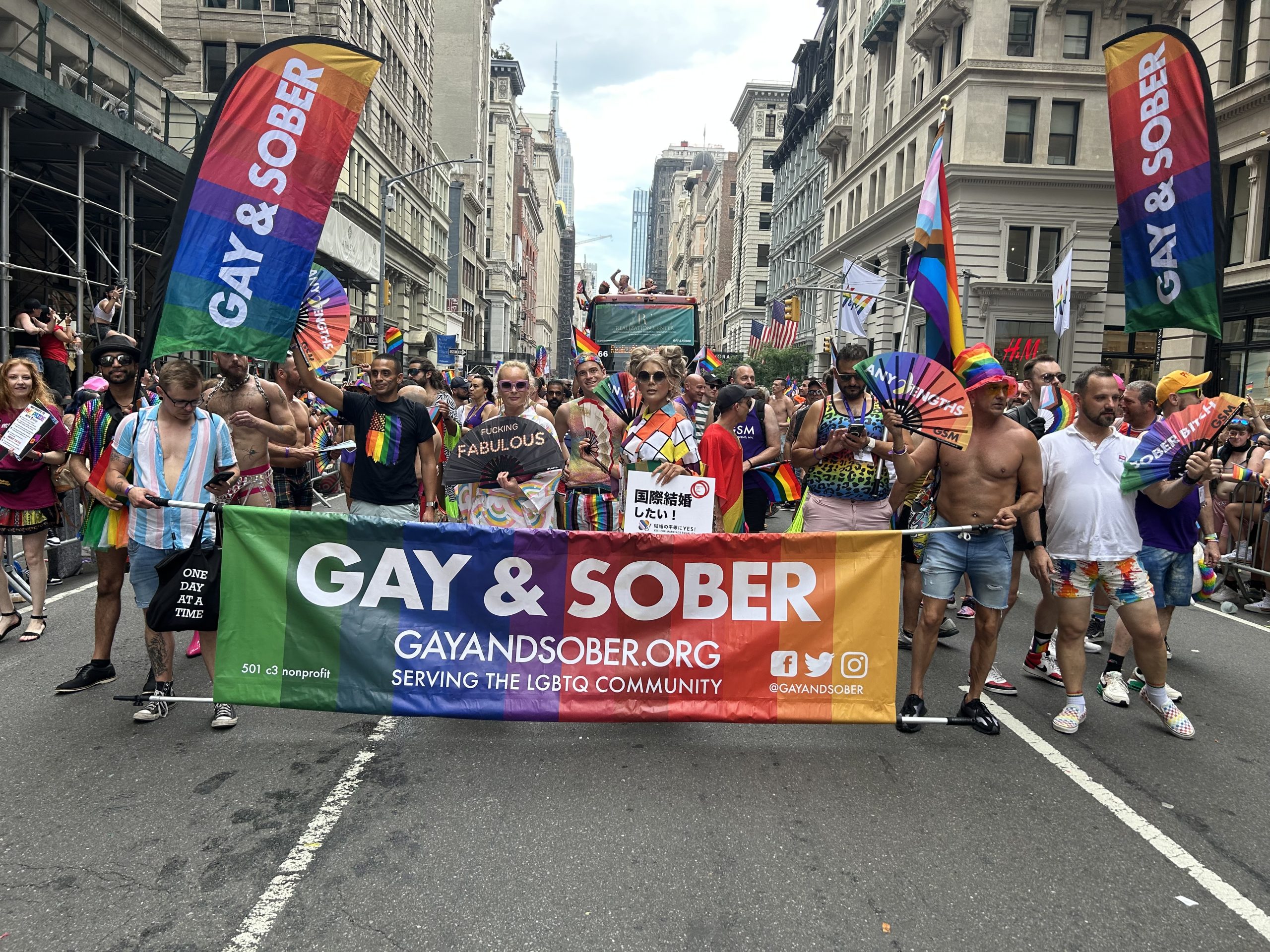
One of the most powerful experiences of my own recovery was marching with the sober gays at New York Pride and then being invited onto a sober boat party sailing along the Hudson River past the Statue of Liberty. It challenged the belief that sobriety meant losing joy. In reality, recovery allowed me to experience joy more authentically than I had before.
THERAPY, CONNECTION, AND HEALING
Recovery can feel incredibly vulnerable because without alcohol or substances, many people suddenly find themselves having to navigate anxiety, intimacy, shame, loneliness, or identity without the coping strategies they once relied upon.
Therapy can offer a space to begin understanding the emotional pain underneath those behaviours, not through judgment or blame, but through compassion and curiosity. Rather than asking “What’s wrong with you?”, therapy can begin exploring questions such as “What happened to you?”, “What did you need to survive?”, and “What pain were you trying to manage?”
For many LGBTQ+ people, healing involves more than reducing harmful behaviours. It involves rebuilding safety, identity, self worth, belonging, connection, and the ability to be fully present in life again.
CHANGE IS POSSIBLE
If you’re struggling with alcohol, substances, chemsex, or addictive behaviours right now, I want you to know that change is possible.
Recovery is possible, connection is possible, happiness is possible.
Not a perfect life, and not a painless life, but a life that no longer revolves around escaping yourself. A life where shame no longer dominates every waking moment, where connection becomes genuine rather than chemically manufactured, and where you no longer feel you have to disappear in order to cope.
If any of this resonates with you and you’d like support exploring it further, I offer LGBTQ+ affirming therapy both online and in person from my practice in Manchester city centre. You’re welcome to get in touch to arrange a free 15 minute introductory call.