



WHAT QUEER JOY REALLY MEANS
When people outside the LGBTQ+ community hear the phrase “queer joy,” they often picture Pride parades, glitter, drag queens, parties, rainbow flags, or celebration. And yes, queer joy can absolutely look like those things. But for many LGBTQ+ people, queer joy runs much deeper than that. It’s often something hard won, something discovered after years of shame, fear, rejection, loneliness, or hiding parts of yourself in order to feel accepted or safe.
For many of us, growing up queer meant growing up feeling different in some way. We learned to monitor ourselves carefully, questioning how we spoke, moved, dressed, acted, or expressed ourselves. Many LGBTQ+ people became highly aware of other people’s reactions long before we ever fully understood ourselves. Over time, this can create hypervigilance, shame, anxiety, and a sense that visibility itself might not feel emotionally safe.
That’s why queer joy matters so much. It isn’t simply about happiness. It’s about finally experiencing moments where you no longer feel the need to shrink yourself to survive.
MY EXPERIENCE OF FINDING QUEER COMMUNITY
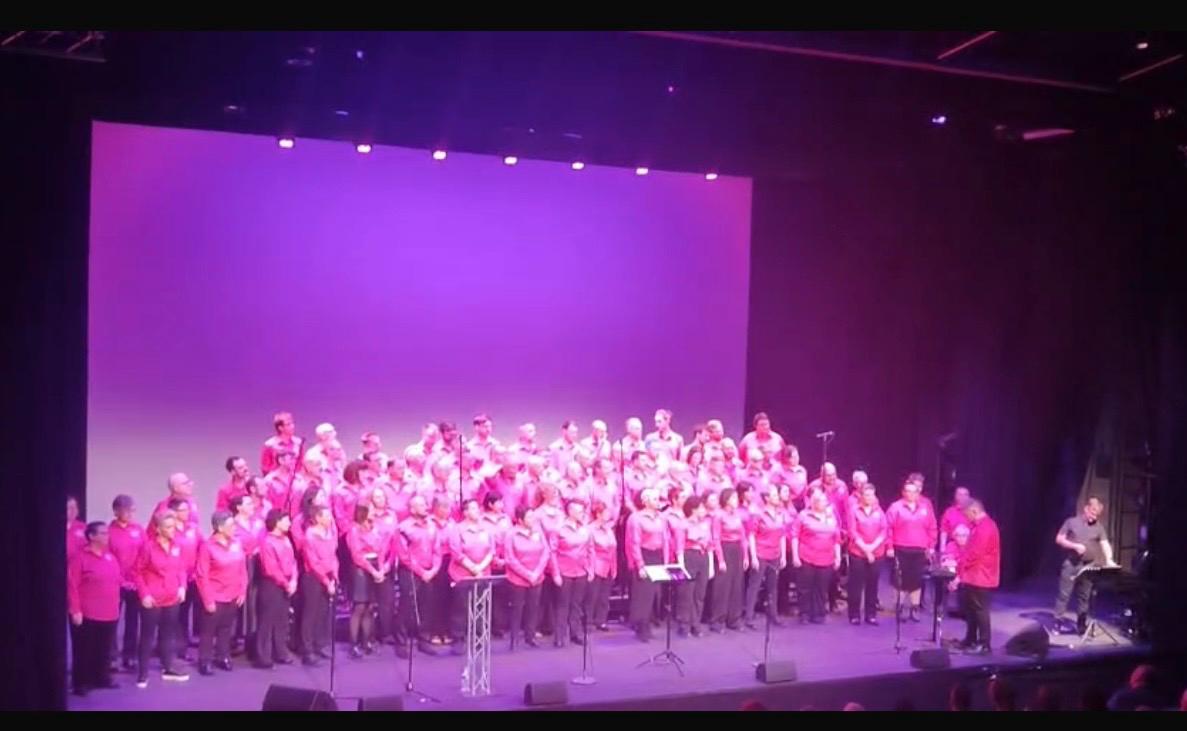
On Saturday night, I stood on stage with the Manchester Proud Chorus at the Contact Theatre in front of more than 300 people for our sold out 25th anniversary concert, Legends, Divas and Dreamers. The atmosphere in the room was electric. Months of rehearsals, learning harmonies, laughing through mistakes, and supporting one another had finally come together in that moment. As we sang, I found myself feeling an overwhelming sense of pride, not just in the performance itself, but in what it represented.
Because for me, joining the choir was never just about singing.
For much of my adult life, alcohol and drugs became part of how I coped with myself and the world around me. They gave me a kind of false confidence. They helped me feel freer, less anxious, less self conscious, and for many years they felt like they worked. Drinking and using became part of how I regulated difficult feelings and managed being around other people.
But over time, they stopped doing what they were supposed to do and became increasingly problematic.
I got into recovery six years ago, and without the drink and drugs to numb things or help me escape, I was suddenly faced with myself completely raw. The perfectionism. The inner critic. The people pleasing. The low self esteem, lack of confidence, and underneath all of it, shame. It was a jarring experience at times, learning how to simply exist without constantly trying to escape myself.
Two years later, I joined the choir because I wanted to start doing something differently. I wanted to build a life that felt healthier, more connected, and more authentic. At the time, I had no idea just how important the choir would become to me.
I still remember sitting in my car before my first ever rehearsal, feeling incredibly anxious and debating whether to drive home instead of walking in. The familiar voice of self doubt started creeping in immediately. What if I don’t fit in? What if nobody likes me? What if I embarrass myself? What if there’s nowhere to sit? What if I walk in and immediately feel awkward or out of place?
As I sat there, I remember thinking about “little Gavin,” the younger version of me who was bullied, beaten up, and called “Gay Gavin” growing up. The little boy who learned early on that visibility could feel dangerous, and that being fully himself might lead to rejection, humiliation, or pain. The part of me that became hyper aware of other people’s reactions, constantly trying to stay safe by staying small.
But sitting there in the car, I realised something had changed.
Little Gavin wasn’t alone anymore. He has me now.
I can hold his hand and tell him it’s going to be okay. That he’s safe. That he’s worthy of connection, friendship, joy, and belonging exactly as he is.
Anxiety has a way of making imagined rejection feel real. I often say that FEAR can stand for False Evidence Appearing Real, because our minds can become incredibly convincing when we feel emotionally unsafe or uncertain. Looking back now, none of the things my anxious mind predicted actually happened.
What I found instead was warmth, connection, laughter, friendship, and community.
When I first joined the choir, I found it incredibly difficult. I genuinely worried that if I wasn’t perfect, I’d somehow be judged or thrown out. That old fear of not being good enough showed up immediately. But over time, something slowly started changing.
The choir taught me that I don’t actually have to be perfect to belong.
Sometimes I sing the wrong words. Sometimes I drift slightly out of key. Sometimes I make mistakes. And nobody humiliates me, rejects me, or tells me I shouldn’t be there. I’m still welcomed back week after week exactly as I am.
Over time, rehearsals stopped feeling frightening and I stopped worrying if my singing was good enough. They became something I genuinely looked forward to each week. I met people who understood one another without needing endless explanation. I formed genuine friendships, not surface level acquaintances, but real connections with people I’ve laughed with, travelled with, performed with, and shared important moments of life with.
One of the choir favourites is Proud by Heather Small, and we sang it again on Saturday night. One of the lines asks: “What have you done today to make you feel proud?”
These days, I think my answer is this: I’ve shown up to life. I’ve done my best. I haven’t been perfect, and that’s okay. I’ve been myself, and as authentic as possible, and for somebody who spent years hiding parts of themselves, that feels like something worth being proud of.
Choir helped teach me that I don’t need to earn belonging through perfection.
I can just be myself. I can wear nail varnish, a sparkly bracelet, laugh loudly, make mistakes, and still be accepted without judgement.
For somebody who spent years feeling ashamed of who they were, that shift from shame to pride has been a long and difficult journey requiring a huge amount of inner work, honesty, healing, self reflection, personal therapy, and learning to face parts of myself I spent years trying to avoid or escape from. My therapy training also helped me begin understanding myself differently. It gave me language and insight into experiences that for years had simply felt confusing, painful, or overwhelming.
The choir has become part of that journey for me, not just as a place to sing, but as a space where I’ve learned I’m allowed to exist fully as myself.
That’s queer joy to me.
WHY LGBTQ+ COMMUNITY SPACES MATTER
I think queer joy is deeply connected to community. Many LGBTQ+ people grow up feeling isolated or emotionally disconnected from the people around them. Some experience bullying, rejection, discrimination, family difficulties, religious shame, or simply the exhaustion of constantly trying to fit into a world shaped around heterosexuality and rigid gender expectations.
Over time, people can start shrinking themselves emotionally in order to survive. They become guarded, hypervigilant, and fearful of visibility. Then one day they walk into a space where they can finally exhale.
That’s what LGBTQ+ spaces can offer people.
Not perfection, not a fantasy world where everyone’s struggles suddenly disappear, but moments of connection, visibility, acceptance, and belonging. Spaces where people feel emotionally safer to experiment with authenticity and slowly realise they’re still accepted afterwards.
One of the things I feel incredibly fortunate about living in a city like Manchester is the huge range of LGBTQ+ groups, organisations, and communities available. Whatever your interests are, there’s often something out there, whether that’s choirs, walking groups, sports clubs, climbing groups, sober socials, theatre, gaming communities, activism, creative arts, or even a LGBTQ+ line dancing group. For many people, these spaces become far more than hobbies. They become places where people finally feel seen, accepted, and understood.
I think that’s especially important because so many LGBTQ+ people grow up without clear rites of passage into community and belonging. Many of us spent years trying to survive rather than fully live. Spaces like these can become places where people slowly begin reconnecting with themselves, experimenting with visibility, and building the kinds of relationships they may never have had the opportunity to experience growing up.
QUEER JOY AS HEALING
I think people sometimes underestimate just how psychologically important queer joy can be. Joy isn’t superficial or frivolous. For many LGBTQ+ people, joy itself can become a corrective emotional experience.
When somebody has spent years expecting rejection, shame, judgement, or exclusion, experiences of safety, visibility, friendship, laughter, and acceptance can begin creating entirely new emotional experiences for the nervous system. Joy reminds people that connection can feel safe, that visibility doesn’t always lead to rejection, and that being fully yourself can sometimes lead to belonging rather than abandonment.
As a therapist, I often see the long term impact of growing up without affirmation. People learn to hide parts of themselves in order to stay safe or maintain connection with others. Over time, this can affect self worth, relationships, confidence, attachment, emotional regulation, and mental health.
That’s why queer joy matters so much. It helps create new emotional experiences that challenge old survival patterns built around shame and fear.
THERE’S A WHOLE LIFE ON THE OTHER SIDE OF FEAR
When I think back now to that anxious version of myself sitting in the car before my first choir rehearsal, I feel emotional about it. Because if I’d listened to fear that night, I would have missed out on so much connection, friendship, laughter, confidence, music, joy….and of course some great holigays!
I think many LGBTQ+ people carry fears around visibility, belonging, and being fully seen. Those fears often make sense given the environments many of us grew up within. But sometimes fear keeps us disconnected from the very things we most need.
If I could speak to that anxious version of myself now, I’d probably say this:
Go in. Stay. Let yourself be seen. There’s a whole life waiting for you on the other side of that fear.
If any of this resonates with you and you’d like support exploring it further, I offer LGBTQ+ affirming therapy both online and in person from my practice in Manchester city centre. You’re welcome to get in touch to arrange a free 15 minute introductory call.
You can also follow me on Facebook, Instagram, and YouTube where I regularly share videos, reflections and resources around LGBTQ+ mental health, shame, relationships, trauma and healing.