

WHAT WAS SECTION 28?
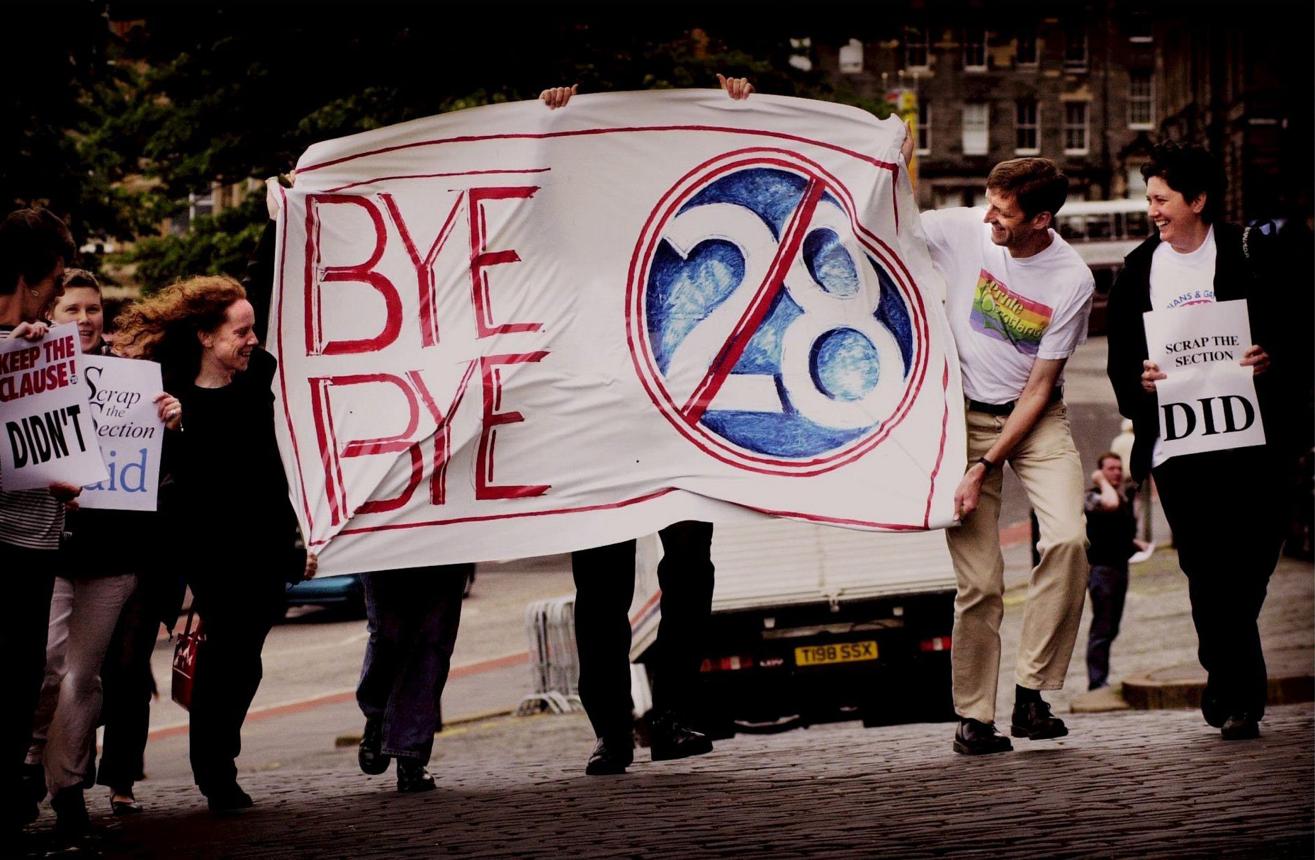
Section 28 was introduced by Margaret Thatcher’s Conservative government in 1988 as part of the Local Government Act. The legislation prohibited local authorities from intentionally “promoting homosexuality” or promoting the teaching of “the acceptability of homosexuality as a pretended family relationship.” Whilst the wording was vague, the impact was immediate. Schools, teachers, youth workers and local authorities became fearful of discussing LGBTQ+ identities in any positive or affirming way.
The legislation remained in force until 2000 in Scotland and 2003 in England and Wales. Yet whilst the law was eventually repealed, its psychological impact didn’t disappear with it. Laws can be changed overnight. The beliefs people absorb from them often take far longer to undo.
For many LGBTQ+ people of my generation, Section 28 wasn’t simply a piece of legislation. It was the backdrop against which we grew up. It was part of the atmosphere we breathed every day, shaping what could be talked about, what remained hidden, and who was considered acceptable.
GROWING UP IN THE SHADOW OF SECTION 28
Looking back now, what stands out most isn’t what was said about LGBTQ+ people. It’s what wasn’t said. There were no positive conversations about being gay. There were no openly LGBTQ+ teachers. There was no discussion about same sex relationships, queer history, or the possibility of a happy future as an LGBTQ+ adult. If you were questioning your sexuality or gender, there was nowhere to look for reassurance. There was nobody saying, “You are okay exactly as you are.”
As children, we naturally look to the adults around us to help us understand who we are. We learn what is valued, what is acceptable, and where we belong. When an entire group of people is absent from those conversations, children don’t assume the omission is accidental. They begin to draw conclusions.
Many of us concluded that there must be something wrong with us.
I grew up during this period and can still remember the fear of being discovered. At school I was bullied relentlessly and became known as “Gay Gavin” long before I was able to understand my own sexuality. I learned very quickly that being perceived as different came with consequences. Like many LGBTQ+ young people, I became highly skilled at monitoring myself. I paid attention to my voice, my mannerisms, my interests and even the smallest details of how I presented myself.
The silence of Section 28 taught many LGBTQ+ young people that they were completely alone.
What makes this particularly painful to reflect upon is that there was no visible alternative. Today, young LGBTQ+ people can at least find representation online, in television programmes, and through community organisations. During Section 28, many of us genuinely believed we might be the only person in the world feeling the way we did.
THE PSYCHOLOGICAL IMPACT OF INVISIBILITY
One of the most damaging aspects of Section 28 was the invisibility it created. Human beings develop their sense of self through reflection. We understand ourselves partly by seeing ourselves reflected in other people. When that reflection is absent, it becomes difficult to develop a secure sense of identity.
Many LGBTQ+ people learned to split themselves in two. There was the version shown to the world, and there was the version that remained hidden. The energy required to maintain that split can be enormous. It creates constant vigilance, anxiety, and self monitoring.
We didn’t need anyone to tell us we were wrong. We learned it from what wasn’t being said.
As a therapist, I often hear clients describe feeling different, disconnected, or fundamentally flawed without fully understanding where those feelings originated. When we explore their histories, the answer frequently becomes clearer. They grew up in environments where their identities were ignored, dismissed, mocked, or treated as something that shouldn’t be discussed.
This isn’t simply a historical issue. These experiences become woven into our nervous systems. They shape how safe we feel in relationships, how comfortable we are expressing ourselves, and whether we believe we deserve acceptance and love.
SECTION 28, SHAME AND MINORITY STRESS
One of the concepts that helped me make sense of my own experiences was minority stress. Minority stress refers to the additional burden experienced by people who belong to marginalised groups. It includes discrimination, concealment, rejection, vigilance, and internalised stigma.
Section 28 created ideal conditions for minority stress to flourish. Young LGBTQ+ people were effectively told that their identities were too controversial to be discussed. Even if nobody explicitly rejected them, the message was still received.
You don’t belong here, keep this hidden don’t talk about this.
Over time, those messages can become internalised. What begins as external prejudice gradually becomes self criticism. Instead of hearing society’s judgement, we begin judging ourselves. This is where shame takes hold.
The question isn’t simply what happened during Section 28. It’s what happened inside the people who lived through it.
Shame is particularly damaging because it attacks identity rather than behaviour. Guilt says, “I did something wrong.” Shame says, “There is something wrong with me.” Many LGBTQ+ people spent years carrying that burden, often without realising where it came from.
When we combine shame with bullying, rejection, family pressures, the AIDS crisis, and a complete absence of positive representation, it becomes easier to understand why rates of anxiety, depression, self harm and substance use have historically been higher within LGBTQ+ communities.
WHY SECTION 28 STILL MATTERS TODAY
Sometimes people ask why we continue talking about Section 28 when it was repealed more than twenty years ago. The answer is simple. Trauma doesn’t disappear because a law changes.
Many of the people who grew up under Section 28 are now in their forties, fifties and sixties. We still carry the lessons we learned during those formative years. We still encounter the echoes of those messages when we struggle with self worth, fear rejection, or hesitate to show our authentic selves.
This is one reason why current attempts to restrict conversations about LGBTQ+ identities, particularly trans identities, feel so concerning to many people of my generation. We’ve seen this before. We know what happens when silence is presented as neutrality.
Silence doesn’t protect young people. It isolates them.
Understanding Section 28 isn’t about dwelling on the past. It’s about recognising how the past continues to shape the present. Only by understanding where these wounds came from can we begin to heal them.
HOW THERAPY CAN HELP
Therapy can offer an opportunity to understand the impact of growing up in a world shaped by shame, silence and invisibility. Many LGBTQ+ people arrive in therapy believing there is something inherently wrong with them, when in reality they are carrying understandable responses to difficult environments.
Through therapy, it becomes possible to identify old survival strategies, challenge internalised stigma, develop self compassion, and build a more authentic relationship with yourself. It can help make sense of the connection between past experiences and present difficulties, allowing you to move away from self blame and towards understanding.
Most importantly, therapy can provide something many LGBTQ+ people didn’t receive growing up: a space where they don’t have to hide. A space where they can be seen, understood, and accepted exactly as they are.
Whatever challenges you’re facing, there’s usually a reason they developed in the first place. The thoughts, feelings, and behaviours we struggle with today are often adaptations to experiences that once required us to survive, protect ourselves, or belong. Understanding those patterns with curiosity and compassion can be the first step towards lasting change.