



PRIDE WAS NEVER JUST A PARTY
Every June, the same question appears, do we still need Pride?
It’s usually asked by people who see rainbow flags hanging from buildings, colourful parades moving through city centres and large crowds gathering in celebration. To them, Pride can appear unnecessary. They look at equal marriage, anti discrimination legislation and increasing visibility and conclude that the struggle has been won.
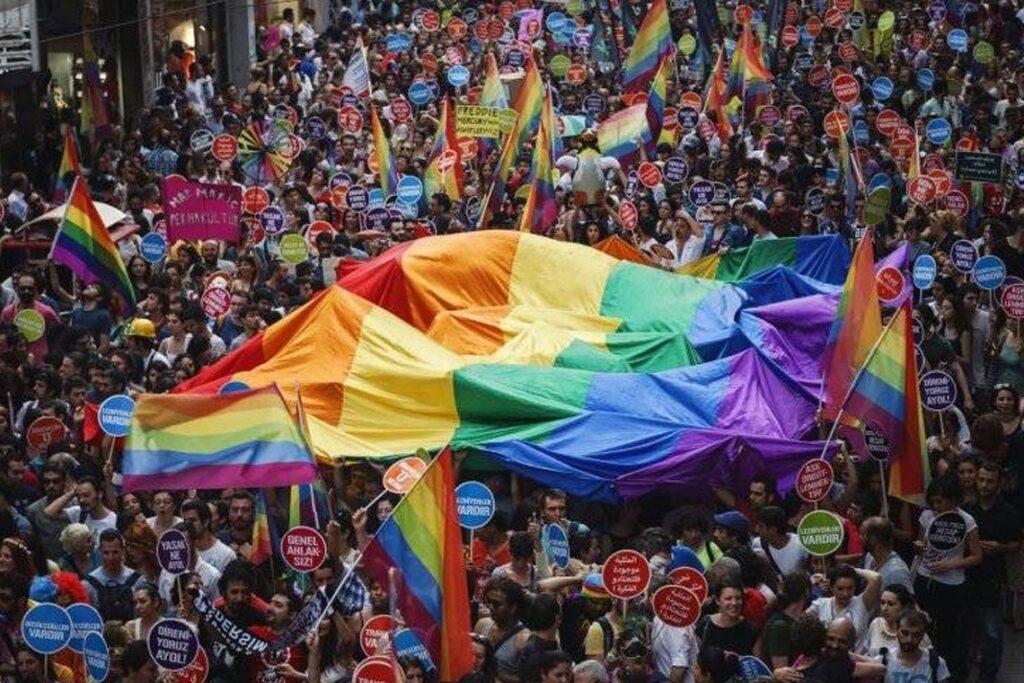
But that question misunderstands what Pride was created for. Pride wasn’t born from celebration. Pride was born from resistance. It emerged because LGBTQ+ people were criminalised, pathologised, discriminated against and subjected to violence. Pride existed because LGBTQ+ people were told that who they were was wrong and because communities came together to challenge that message.
As a gay man who grew up during the era of Section 28, I remember a very different world. Positive LGBTQ+ representation was almost impossible to find. The AIDS crisis dominated public discussion about gay men. Newspapers and television often portrayed LGBTQ+ people as either tragic, dangerous or something to laugh at. Openly gay role models were rare, and many of us learned very quickly that being visible could come at a cost.
I became skilled at reading the room. I learned to monitor what I said, how I behaved and what I revealed about myself. Looking back, I can see how much energy went into trying not to be noticed. Like many LGBTQ+ people, I adapted to survive in an environment that didn’t always feel safe.
As a therapist, I now understand these experiences through the lens of minority stress. When people grow up hearing negative messages about who they are, those messages don’t simply disappear because laws change. They become woven into our nervous systems. They influence how safe we feel, how much we trust ourselves and how easily we believe we belong.
Pride wasn’t created because LGBTQ+ people had equality. It was created because we didn’t.
That’s one of the reasons Pride remains so important. The conditions that created Pride haven’t disappeared. They have changed shape, but they continue to exist.
THE WORLD HAS CHANGED, BUT PREJUDICE HASN’T DISAPPEARED
One of the assumptions people often make is that because LGBTQ+ rights have improved, prejudice has somehow vanished.
Unfortunately, that isn’t true. The language may have changed and the laws may have improved, but prejudice rarely disappears entirely. More often, it adapts. It presents itself in new ways. It disguises itself as concern, tradition, morality or common sense.
As somebody who lived through decades of overt homophobia, I sometimes find it unsettling how familiar current debates can feel. The target may be different, but the mechanisms remain remarkably similar. A minority group is presented as a threat. Fear is amplified. Public anxiety is encouraged. Complex social issues are reduced to simplistic narratives that blame already marginalised communities.
One of the things history teaches us is that prejudice doesn’t require a majority of people to be openly hostile. It only requires enough people to remain silent while others become louder.
When influential people express prejudice, it has consequences. Political leaders, media personalities and public figures don’t simply share their opinions. They shape public discourse. They legitimise certain attitudes and normalise certain beliefs. When people in positions of power express discriminatory views, they often give others permission to voice prejudices that previously remained hidden.
We’ve seen this repeatedly throughout history, the prejudice already existed, the difference is that somebody gave it a microphone.
When people in power legitimise prejudice, they don’t create it. They give it permission to speak.
This is one of the reasons developments in other countries matter. What happens elsewhere doesn’t stay elsewhere.
WHEN THE US GETS A COLD, THE UK SNEEZES
There’s an old saying that when the US gets a cold, the UK sneezes. Historically, the phrase referred to economics. Increasingly, it feels relevant to LGBTQ+ rights as well.
Over recent years we’ve witnessed significant attacks on Diversity, Equity and Inclusion initiatives across parts of the US. LGBTQ+ inclusion programmes have been dismantled. Trans healthcare has become increasingly politicised. Political figures continue to challenge protections that many people once assumed were secure. Even symbolic gestures of support towards LGBTQ+ communities and those affected by HIV and AIDS have become politically contested.
The important thing to recognise is that ideas travel. Social media, news outlets and political networks ensure that narratives move quickly across borders. The talking points that emerge in America today often appear in British political discourse tomorrow.
This matters because rights are not self sustaining. They require public support, political protection and continued vigilance. Many people assume that because equal marriage exists today it will always exist. History offers no such guarantees. Rights can move forwards, rights can also move backwards. The freedoms LGBTQ+ people enjoy today were fought for by previous generations. They weren’t gifted to us out of kindness. They were secured through activism, visibility and collective action.
History rarely repeats itself exactly, but it often rhymes.
That’s precisely why Pride remains necessary.
THE TARGETING OF TRANS PEOPLE SHOULD CONCERN ALL OF US
Perhaps nowhere is this more evident than in the treatment of trans people.
Over recent years, trans people have become the focus of extraordinary public scrutiny. Their identities, healthcare, rights and very existence have become subjects of relentless debate. Many trans people describe feeling exhausted by constantly seeing themselves discussed as a political issue rather than recognised as human beings.
As somebody who remembers the rhetoric directed towards gay people in previous decades, I often find the similarities difficult to ignore. The fear. The misinformation. The moral panic. The suggestion that a minority group somehow poses a threat to wider society.
I’ve heard these themes before, many older LGBTQ+ people have. The details differ, but the underlying dynamics feel painfully familiar. One of the reasons Pride remains so important is because it reminds us that attacks on one part of our community affect all of us. The progress made by gay, lesbian and bisexual people wasn’t achieved by standing apart from trans people. It was achieved through solidarity.
When a society starts debating whether one minority deserves equal treatment, every minority should pay attention.
THE RISE OF THE FAR RIGHT
Across Britain and Europe, we’ve also witnessed growing confidence among far right movements. These movements often thrive by identifying minority groups and presenting them as threats to society. Sometimes the target is immigrants. Sometimes it’s refugees. Sometimes it’s Muslims. Sometimes it’s LGBTQ+ people.
The target changes, the strategy remains the same, fear is used to create division. Recently, many LGBTQ+ people felt deeply uneasy when a Christian nationalist group known as The King’s Army marched through Soho. Whether intentional or not, many experienced it as an act of intimidation rather than an expression of faith. At a time when anti LGBTQ+ rhetoric is increasing and homophobic and transphobic assaults are rising, events like this carry symbolic weight.
What struck me wasn’t simply the march itself. It was the support it received from some quarters and the hostility directed towards LGBTQ+ people discussing it. If Pride didn’t matter, people wouldn’t be so determined to challenge it. If LGBTQ+ visibility wasn’t important, it wouldn’t provoke such strong reactions.
If Pride was meaningless, people wouldn’t spend so much energy trying to stop it.
The rights we enjoy today weren’t won by individuals standing alone. They were won by communities standing together.
SOLIDARITY CHANGES HISTORY
One of the most powerful lessons Pride teaches us is that progress rarely happens in isolation. Many of the rights LGBTQ+ people enjoy today were achieved because different communities recognised their shared struggles and stood alongside one another. One of the best examples is the story of Lesbians and Gays Support the Miners during the 1984 to 1985 miners’ strike. At a time when LGBTQ+ people faced widespread hostility, gay and lesbian activists raised money to support striking mining communities.
Progress happens when ordinary people refuse to be divided and choose solidarity instead.
What began with suspicion grew into friendship, solidarity and mutual respect. The story was later portrayed in the film Pride, but its legacy extends far beyond the screen. Many historians argue that these relationships helped build support for LGBTQ+ equality within the trade union movement and contributed to some of the progress we benefit from today.
More recently, when Durham Pride lost funding following the election of a Reform UK administration to Durham County Council, the Durham Miners’ Association once again stepped forward to offer support. Decades later, the miners are still showing up for our community. It’s a powerful reminder that solidarity matters. Pride isn’t only about celebrating who we are. It’s about recognising that when communities stand together, positive change becomes possible.
CONVERSION PRACTICES AND COMPLACENCY
Another reason Pride remains necessary is that conversion practices still haven’t been banned in the UK. Successive governments have promised action. Successive governments have delayed. Despite overwhelming evidence demonstrating the harm caused by attempts to change or suppress a person’s sexual orientation or gender identity, LGBTQ+ people remain vulnerable. The fact that this issue remains unresolved tells us something important.
There are many people who fundamentally believe LGBTQ+ identities should be changed. There are still people who believe authenticity is a problem requiring correction. That reality alone should remind us why Pride matters. Pride isn’t simply about celebrating progress. It’s about recognising the work that remains unfinished.
PRIDE PROTECTS AGAINST MINORITY STRESS
As a therapist, I see the impact of minority stress every day. Shame, anxiety, hypervigilance, rejection sensitivity, people pleasing and low self worth frequently emerge within environments where LGBTQ+ people have been taught that acceptance is conditional.
One of the most powerful antidotes to shame is connection. Some of my happiest memories have taken place in LGBTQ+ spaces. Singing with Manchester Proud Chorus. Attending Pride events. Supporting trans communities at Sparkle Weekend. Spending time with people who understand what it’s like to navigate the world as LGBTQ+.
These experiences aren’t superficial, they aren’t frivolous, they’re protective. Research consistently shows that community and belonging support mental wellbeing. Pride creates opportunities for people to experience both.
Queer joy isn’t frivolous. It’s one of the ways we heal.
At a time when many forces seek to divide people, Pride reminds us that connection remains one of our greatest strengths.
SO, DO WE STILL NEED PRIDE?
Of course we do, perhaps more than we have done for quite a few years! We need Pride because prejudice still exists. We need Pride because homophobic and transphobic assaults continue to rise. We need Pride because trans rights are being challenged. We need Pride because conversion practices still haven’t been banned. We need Pride because far right movements continue to gain confidence and support. We need Pride because politicians and public figures can legitimise prejudice by giving it a public platform. We need Pride because LGBTQ+ people across much of the world continue to face criminalisation, persecution and violence. Most importantly, we need Pride because history teaches us that progress is never guaranteed.
The rights we enjoy today were fought for by previous generations who refused to remain silent. Pride honours their struggle, protects the gains that have been made and reminds us that equality requires ongoing vigilance. The question isn’t whether we still need Pride. The question is why anyone thinks we don’t.
HOW THERAPY CAN HELP
Growing up in a world that questions your identity can leave lasting emotional scars. Many LGBTQ+ people continue to carry shame, anxiety, hypervigilance and self criticism long after the original experiences have passed.
Therapy can help you understand how these patterns developed and how they continue to influence your life today. It can help you challenge internalised shame, build self worth and develop a stronger relationship with yourself. Most importantly, therapy can provide a space where your experiences are understood within the wider context of minority stress and LGBTQ+ identity.
Whatever challenges you’re facing, there’s usually a reason they developed in the first place. The thoughts, feelings, and behaviours we struggle with today are often adaptations to experiences that once required us to survive, protect ourselves, or belong. Understanding those patterns with curiosity and compassion can be the first step towards lasting change.