




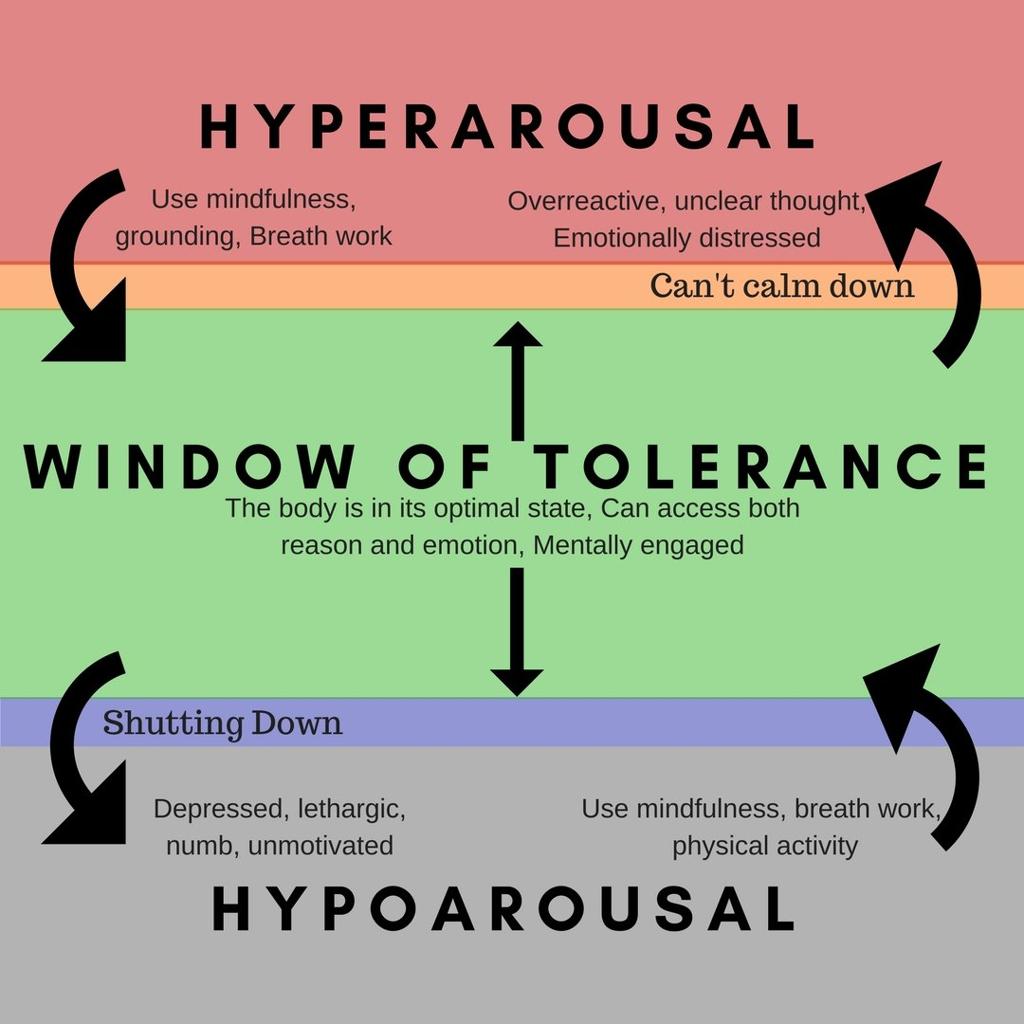
WHAT IS THE WINDOW OF TOLERANCE?
Many people struggle to understand why they sometimes feel emotionally overwhelmed, anxious, angry, numb, disconnected, or completely shut down seemingly out of nowhere. It can be easy to assume that something is wrong with us when our emotions feel intense or difficult to manage. One of the things I often find helpful in therapy is psychoeducation because understanding what is happening in our bodies can be incredibly powerful.
The Window of Tolerance is a psychological model that helps explain how the nervous system moves between states of regulation and survival. When we are within our window of tolerance, we are generally able to think clearly, stay emotionally present, reflect on situations, and respond rather than react. When stress, shame, trauma, or emotional triggers push us outside of that window, the nervous system can shift into survival mode.
For some people this may look like hyperarousal. They might feel anxious, panicked, angry, overwhelmed, hypervigilant, or unable to switch their thoughts off. For others it may look more like hypoarousal, where they feel numb, disconnected, withdrawn, exhausted, or emotionally shut down. These responses can feel confusing, particularly when we don’t understand why they’re happening.
One of the most valuable aspects of understanding the Window of Tolerance is that it can help us move away from self criticism and towards self compassion. Instead of asking “What’s wrong with me?”, we can begin asking “What’s happening in my nervous system right now?”
Understanding what’s happening in our nervous system can help us move from self criticism to self compassion.
That shift might seem small, but it often creates space for curiosity, understanding, and kindness towards ourselves. Rather than viewing ourselves as broken or flawed, we can begin recognising that our minds and bodies are responding to perceived threats in ways that were often learned through experience.
CONNECTING THE DOTS BETWEEN TRIGGERS AND EMOTIONAL RESPONSES
One of the things I love about therapy is helping people connect the dots between what’s happening in their body and what’s happening in their lives. Once we understand the nervous system, many reactions that previously felt confusing start to make a lot more sense.
For example, constructive feedback from a manager may trigger feelings of failure, criticism, or not being good enough. A friend reading a WhatsApp message but not responding for several hours may trigger fears of rejection, abandonment, or being disliked. On the surface, these situations might appear relatively minor, yet they can activate powerful emotional responses because they connect with deeper insecurities and earlier experiences.
Many people discover that they’re not simply reacting to what is happening in the present moment. They are also reacting to what that situation means to them emotionally. If criticism has historically felt unsafe, criticism today may trigger a threat response. If rejection has been painful in the past, uncertainty in relationships may activate anxiety, hypervigilance, or self doubt.
What often looks like an overreaction is frequently a threat response connected to earlier experiences and deeper emotional wounds.
This is particularly relevant for many LGBTQ+ people. Experiences such as bullying, rejection, concealment, shame, discrimination, or growing up in less affirming environments can leave the nervous system particularly sensitive to perceived threats. The body learns to stay alert because at one point that vigilance may have been necessary.
HOW THERAPY CAN HELP WIDEN YOUR WINDOW OF TOLERANCE
One of the goals of therapy is not simply to reduce difficult emotions but to help people better understand them. When we understand our triggers, recognise our patterns, and become more aware of our nervous system responses, we can begin responding to ourselves differently.
I know personally how powerful this kind of understanding can be. During my therapy training, we were having a professional development session. We were all sat in a circle talking about some fairly vulnerable topics, and something must have triggered me. At the time, I didn’t realise what was happening, but I was having a panic attack.
I had experienced them on occasions throughout my life, but I didn’t have the language, understanding, or awareness to recognise them for what they were. What I felt was intense fear and paranoia. I became convinced that everybody in the room hated me and that I was somehow a terrible person. Every part of me wanted to escape. I wanted to get home because home felt safe. I remember trying to think rationally and talk myself out of it, but I couldn’t. The emotional intensity completely overwhelmed any logical understanding of the situation.
At some point I made some sort of noise. Looking back, it was probably the first time in my life that I had allowed other people to see what was happening for me in one of those moments. I must have felt safe enough in that environment to let my guard down, even if only briefly. My tutor recognised what was happening and calmly said, “I think you’re having a panic attack.” Gradually, I settled and the feeling passed.
What strikes me when I look back on that experience is how little understanding I had of what was happening in my body. I didn’t know about the threat system. I didn’t understand emotional regulation. I had never heard of the Window of Tolerance. All I knew was that I felt terrified and wanted to get away.
Today, I understand those experiences very differently. I can recognise the signs when my nervous system is becoming activated. I understand the relationship between triggers, emotions, thoughts, and bodily sensations. Most importantly, I no longer interpret those experiences as evidence that something is wrong with me. That knowledge has been transformative, and I haven’t experienced a panic attack since.
This is one of the reasons I value psychoeducation so highly in therapy. Understanding doesn’t solve everything, but it often creates space. Space to become curious rather than critical. Space to recognise what is happening rather than becoming overwhelmed by it. Space to respond differently. I’ve experienced that shift personally, and I’ve seen it happen for many clients too.
Rather than judging ourselves for feeling anxious, overwhelmed, angry, or shut down, we can begin to recognise these reactions as attempts by the nervous system to keep us safe. We can explore where these responses originated, how they may have helped us in the past, and whether they are still serving us in the present.
Over time, this awareness can help us gradually widen our window of tolerance. Situations that once felt overwhelming may become more manageable. Emotional reactions may become easier to regulate. We can learn to notice when we are moving into survival mode and develop strategies that help us return to a more regulated state.
In this video, I explore the Window of Tolerance, emotional regulation, trauma responses, the nervous system, and the difference between hyperarousal and hypoarousal. I also discuss how therapy and self awareness can help people recognise triggers, regulate emotional overwhelm, and gradually widen their window of tolerance over time. If you often struggle with anxiety, emotional overwhelm, shutdown, or feeling stuck in survival mode, I’d really encourage you to watch the video.