



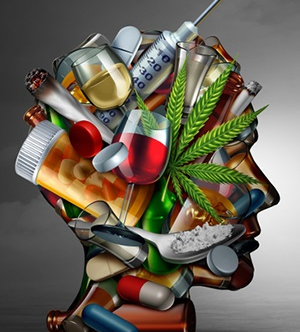
When people think about addiction, they often focus on the substance or behaviour itself. Alcohol, drugs, gambling, pornography, shopping, food or sex become the centre of attention, and the question quickly becomes, “Why can’t they just stop?” As both a therapist and a gay man in recovery, I’ve come to see addiction differently. Today, I think one of the most important questions we can ask is not, “What’s wrong with this person?” but, “What is the addiction doing for them?” Because addiction rarely appears out of nowhere. More often, it develops because it serves a purpose. It helps someone manage overwhelming emotions, escape painful memories, reduce anxiety, quieten shame or feel connected when they otherwise feel alone. In that sense, addiction isn’t usually the problem itself. It’s an attempt to solve a problem. The tragedy is that the solution eventually becomes a problem of its own.
GROWING UP IN A STATE OF AMBER ALERT
When I look back at my own life, I often think about childhood and adolescence through the lens of trauma and minority stress. As a gay teenager growing up during the Section 28 era, life often felt lonely and unsafe. School wasn’t simply a place to learn. It was an environment where I learned to monitor myself constantly. I became highly attuned to other people’s reactions, careful about what I said, how I behaved and how visible I allowed myself to become. At the time, I didn’t have words like hypervigilance, minority stress or trauma. I simply thought this was normal.
Looking back now, I suspect my nervous system spent much of those years in what I think of as a permanent state of amber alert. Not immediate danger, but a constant sense that danger might be just around the corner. A look, a comment, a rumour, rejection or humiliation. Living that way is exhausting. When your nervous system spends years preparing for threat, relief becomes incredibly attractive. In many ways, I think that’s where the story of addiction begins for many LGBTQ+ people. Before the substances, before the behaviours and before the consequences, there is often a nervous system desperately searching for a way to feel safe.
RELATIONAL TRAUMA AND LGBTQ+ LIVES
When people hear the word trauma, they often think about major events such as accidents, assaults or disasters. While these experiences can certainly be traumatic, trauma can also develop through relationships. Relational trauma occurs when the people we depend upon for safety, connection and acceptance are unable or unwilling to meet those needs consistently. It may involve criticism, emotional neglect, bullying, rejection, abandonment or the experience of having important parts of ourselves ignored, shamed or denied.
Many LGBTQ+ people have experienced some form of relational trauma. For some, it may involve overt rejection from parents, peers or religious communities. For others, it may be more subtle. Growing up feeling different, learning to hide parts of yourself, never seeing people like you reflected around you, or receiving the message that acceptance is conditional can all shape how safe we feel in relationships. Human beings learn about themselves through relationships, and when relationships repeatedly communicate that who we are is unacceptable, we often internalise those messages. We become cautious, anticipate rejection, struggle to trust and learn to prioritise safety over authenticity.
Over time, these experiences don’t just affect how we think. They affect our nervous systems. They influence how we regulate emotions, how we relate to other people and how we soothe ourselves when life becomes difficult. Many LGBTQ+ people arrive in adulthood carrying wounds that were created in relationships, so it isn’t surprising that they sometimes look for relief in substances, behaviours or experiences that temporarily make those wounds easier to bear.
THE FIRST TIME THE NOISE STOPPED
I can still remember taking drugs for the first time. What stands out isn’t the substance itself but the feeling it created.
For the first time in my life, it felt like nobody was looking at me.
I wasn’t scanning the room, wondering what people thought about me, monitoring my voice, my mannerisms or whether I was somehow getting it wrong. The constant self consciousness that had followed me for years simply disappeared. The relief was extraordinary. Looking back now, I don’t think I was chasing pleasure so much as freedom. For a few hours I felt comfortable in my own skin, relaxed, connected and present. The alarm system that had been running quietly in the background for years suddenly switched off.
The same was true of alcohol. Long before drugs became part of my story, alcohol gave me something I struggled to find naturally: confidence. Social situations felt easier. Conversations flowed more easily. The self consciousness faded into the background and I found it easier to connect with people and feel like I belonged. At the time, I had no understanding of emotional regulation, trauma or minority stress. I simply knew that alcohol and drugs changed how I felt, and for somebody carrying anxiety, loneliness and shame, that felt incredibly powerful. This is one of the reasons addiction can be so difficult to understand from the outside. People often assume addiction is about pleasure. My experience was that it was often about relief.
ADDICTION AS EMOTIONAL REGULATION
One of the most important things trauma affects is our ability to regulate emotions. Ideally, children learn emotional regulation through relationships. They learn that difficult feelings can be tolerated, soothed and survived. When a child is frightened, somebody helps them feel safe. When they’re upset, somebody helps them make sense of what they are feeling. Over time, these experiences become internalised and develop into an ability to regulate emotions independently.
The difficulty is that many people never receive enough of these experiences. When emotional needs are ignored, criticised or met inconsistently, children are often left to manage overwhelming feelings alone. This is particularly relevant for many LGBTQ+ people, who may grow up feeling different, misunderstood or unable to talk openly about their experiences. Instead of learning how to process fear, loneliness, shame or anxiety, they may learn to suppress those feelings, hide them or carry them in isolation.
Addiction often begins as an attempt to regulate emotions that feel impossible to carry alone.
When viewed through this lens, addiction begins to make more sense. Alcohol reduces anxiety. Drugs create temporary relief. Compulsive behaviours provide distraction from emotional pain. For a while, these strategies work. That is the uncomfortable truth about addiction. If they didn’t work, nobody would keep returning to them. The problem is that the relief is temporary. The underlying distress remains untouched, waiting underneath the surface. Over time, the person increasingly relies on the substance or behaviour whenever difficult emotions arise, and what began as a coping strategy gradually becomes a dependency.
SHAME, LGBTQ+ EXPERIENCES AND ADDICTION
In my work as a therapist, I often notice how closely addiction and shame are connected. Many LGBTQ+ people grow up receiving messages that who they are is somehow wrong. Those messages may come through bullying, rejection, invisibility, discrimination or simply growing up in environments where nobody seems to be like you. Even when those messages are never spoken directly, they can still be absorbed through the absence of representation, the fear of being different or the pressure to conform.
Over time, these experiences can become internalised. The result is often a deep sense of shame. Not shame about what we have done, but shame about who we are. This distinction matters because shame attacks the self rather than the behaviour. It creates the feeling that there is something fundamentally wrong with us, and when people carry that belief for long enough they often begin searching for ways to escape it.
Not shame about what we have done, but shame about who we are.
Substances can temporarily silence shame. For a few hours, the inner critic becomes quieter. Self doubt fades into the background. Loneliness becomes easier to tolerate. The world feels less threatening and the self feels less flawed. Unfortunately, addiction often creates additional shame. People begin hiding behaviours, breaking promises to themselves and experiencing consequences they deeply regret. The very thing that once helped manage shame begins generating more of it, creating a vicious cycle that can feel impossible to escape.
WHEN SURVIVAL STRATEGIES BECOME SELF DESTRUCTIVE
One of the ideas that runs through much of my writing is that many psychological difficulties begin as adaptations. Hypervigilance is an adaptation. People pleasing is an adaptation. Perfectionism is an adaptation. Emotional suppression is an adaptation. Addiction can be understood in exactly the same way.
What once protected us can eventually begin to limit us.
At some point, it served a purpose. At some point, it helped us survive. The difficulty is that adaptations don’t always update when our circumstances change. What once protected us can eventually begin to limit us. The substances that helped me feel confident, connected and safe eventually became part of the problem. The strategy that had once provided relief gradually created its own consequences, and the thing that had helped me survive was now hurting me.
This is often the point at which people become trapped in self judgement. They look at the consequences of their addiction and conclude that they are weak, broken or lacking willpower. Yet when we step back and view the behaviour within the context of trauma, minority stress and emotional survival, a different picture emerges. The addiction was never random. It developed because it was meeting a need. The challenge is that it eventually became a costly and increasingly ineffective way of meeting that need.
RECOVERY AS LEARNING TO FEEL
One of the biggest surprises of recovery was discovering that stopping substances was only part of the process. The emotions didn’t disappear. If anything, they became louder. Anxiety was still there. Loneliness was still there. Shame was still there. The experiences I had spent years trying to avoid were suddenly impossible to ignore.
Recovery required me to learn skills I had never fully developed in the first place. I had to learn how to sit with anxiety rather than escape it. How to tolerate loneliness without immediately trying to numb it. How to experience difficult emotions without becoming overwhelmed by them. Most importantly, I had to learn how to feel safe without relying on substances.
Looking back, recovery wasn’t really about giving something up. It was about finding healthier ways to achieve what the addiction had been trying to provide all along: safety, connection, confidence, belonging and relief. The more I learned about trauma, emotional regulation and the nervous system, the more my own story started to make sense. I stopped seeing addiction as evidence that something was wrong with me and started understanding it as an adaptation to circumstances that had felt overwhelming at the time.
That shift didn’t remove responsibility, but it did replace shame with compassion. Instead of asking why I was so weak, I began asking what pain I had been trying to escape. Instead of viewing recovery as punishment, I began seeing it as an opportunity to learn new ways of relating to myself and the world around me.
Recovery isn’t just about removing the addiction. It’s about understanding what the addiction was trying to protect you from.
HOW THERAPY CAN HELP
Trauma informed therapy doesn’t ask, “What’s wrong with you?” Instead, it asks, “What happened to you?” and “What did you have to do to survive?” For many people, that shift is transformative. Rather than viewing addiction as evidence of weakness or failure, we begin to understand it as an adaptation to pain, fear, shame and emotional overwhelm. Often a costly adaptation, but an adaptation nonetheless.
When we understand addiction through this lens, compassion becomes possible. We can begin exploring the experiences that made the addiction necessary in the first place and develop healthier ways of regulating emotions, building connection and caring for ourselves. Rather than focusing solely on stopping the behaviour, therapy helps us understand the needs that sit underneath it. It creates space to process trauma, challenge shame, strengthen emotional regulation and develop safer ways of coping with life’s inevitable difficulties.
Whatever challenges you’re facing, there’s usually a reason they developed in the first place. The thoughts, feelings, and behaviours we struggle with today are often adaptations to experiences that once required us to survive, protect ourselves, or belong. Understanding those patterns with curiosity and compassion can be the first step towards lasting change.